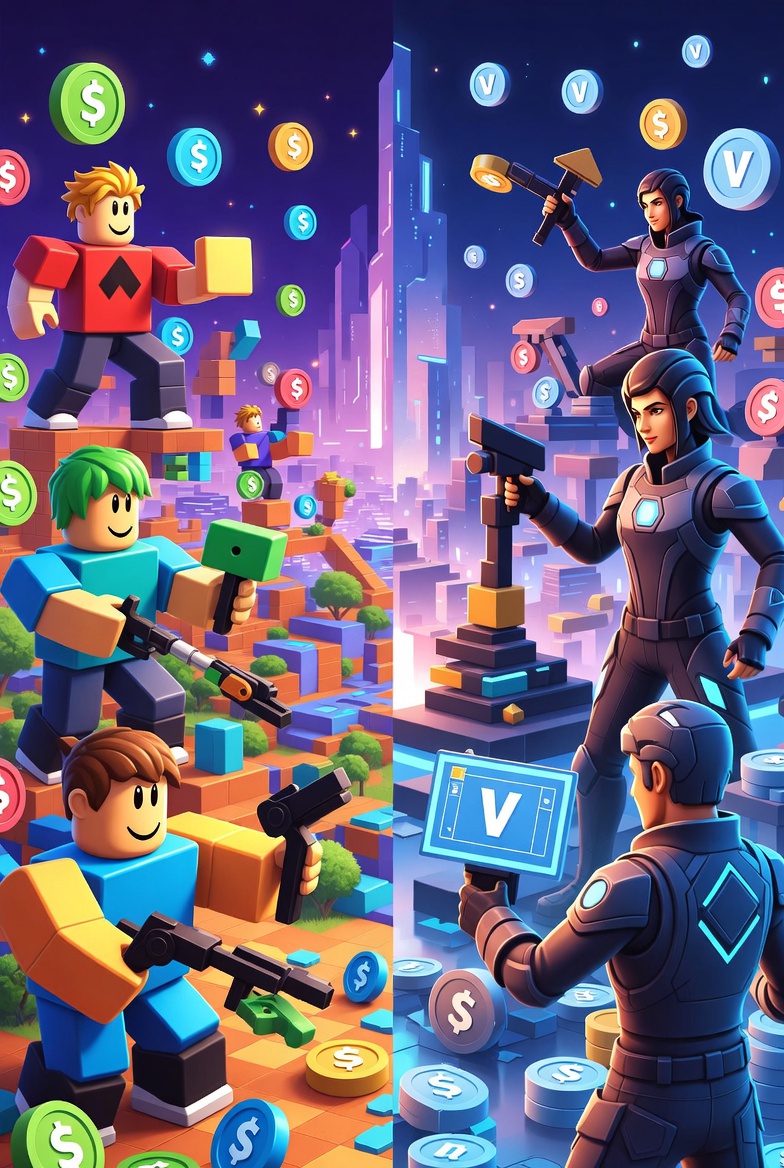
Introduction: The New Age of Digital Creativity
Step aside, Hollywood and Silicon Valley—the new rockstars of this era are game creators, digital artists, and teenage developers. We’re living in a time where building a virtual world in your bedroom could lead to a six-figure income, and sometimes, even millions. Sounds wild? Welcome to the booming creator economy, where platforms like Roblox and Fortnite are not only playgrounds for Gen Z but also powerful engines of entrepreneurship.
It’s no longer just about playing games. Today, users are building them, monetizing them, and building loyal audiences along the way. In fact, the creator economy tied to these platforms has exploded so much that it’s now spilling into broader demographics—Millennials, Gen Alpha, and even older generations are joining in.
Whether you’re crafting obstacle courses in Roblox or designing immersive battle arenas in Fortnite, the potential to generate real income from virtual creativity is unprecedented. These platforms are rapidly reshaping what we know about careers, entertainment, and even education. But how exactly are Roblox and Fortnite powering this seismic shift in wealth distribution and opportunity?
Let’s break it down step by step.
What is the Creator Economy?
Before we dive deep into Roblox and Fortnite, let’s clear up what the creator economy actually is. In simple terms, it’s the ecosystem of people who make money by producing and distributing digital content. Think YouTubers, Twitch streamers, TikTok influencers—but also game developers, modders, artists, writers, and coders creating content for digital platforms.
Unlike traditional job markets, the creator economy thrives on platforms that empower individuals to build and distribute their work directly to audiences. No middleman. No corporate gatekeepers. Just raw creativity—and the internet.
And guess what? It’s big business. According to a report by SignalFire, over 50 million people worldwide consider themselves creators. And this economy is valued in the hundreds of billions, with major platforms dishing out huge sums to retain and support these digital artisans.
Now, what makes the gaming world so special? Games like Roblox and Fortnite have added another layer: interactivity. Instead of just watching content, users engage, play, and even pay to experience it. That means more engagement, more retention, and yes—more money.
How Roblox and Fortnite Became the Cornerstones of the Creator Economy
Roblox and Fortnite didn’t just stumble into this role—they built it intentionally.
Roblox, launched in 2006, is more than a game—it’s a platform that allows users to create their own games using Roblox Studio. The company went public in 2021, and their creator community quickly became one of the driving forces behind their success. The best part? Many top creators are under 25, and several have made millions by monetizing their games.
Fortnite, on the other hand, started as a Battle Royale but evolved into a full-blown metaverse experience. With the introduction of Fortnite Creative and the Unreal Editor for Fortnite (UEFN), creators can now build interactive maps, game modes, and experiences—and Epic Games pays them for the engagement they generate.
These platforms are now digital economies of their own, complete with revenue models, performance metrics, and advertising opportunities. And while they initially gained traction among Gen Z, today, they’re expanding far beyond that.
The Rise of User-Generated Content in Gaming
Here’s the game-changer: user-generated content (UGC) is no longer just a fun addition—it’s the core of gaming platforms like Roblox and Fortnite. Instead of relying solely on in-house developers, these platforms have handed over the keys to their community. Want to build a haunted house map, a new survival game, or a virtual music festival? Go for it. The tools are there, and the audience is waiting.
This shift has completely flipped the script. In traditional gaming, the dev team builds the game, and users play. Now? Users create, other users play, and the platform takes a small cut. It’s a win-win for everyone. Roblox alone hosts over 40 million experiences, the vast majority of which were made by everyday users, not companies.
This model does three powerful things:
- Scales innovation quickly – When millions of people are building content, there’s no bottleneck on creativity.
- Boosts engagement – Players become invested not just in the game but in the community and the building process.
- Unlocks revenue potential – Creators can monetize their content, and platforms thrive off the sheer volume of engagement.
Platforms like Roblox and Fortnite have taken note. They continually update their creator tools to make them easier, more powerful, and more accessible. This, in turn, draws in more creators—from indie developers to kids experimenting with code for the first time.
In short? UGC is the backbone of the modern gaming creator economy. And it’s only getting bigger.
Roblox Studio: A Game Engine for the Masses
What makes Roblox so unique is its approach to democratizing game development. You don’t need a degree in computer science or a massive budget. All you need is Roblox Studio, a free development environment where anyone—literally, anyone—can start building.
Roblox Studio uses Lua, a lightweight programming language that’s both powerful and beginner-friendly. The interface is intuitive enough for a teenager but robust enough for a professional. Whether you’re designing a fashion simulator, an adventure RPG, or a virtual theme park, Roblox Studio gives you the power to bring your vision to life.
But here’s where things get really interesting: Roblox creators can monetize their games through in-game purchases, known as Robux. Players use Robux to buy skins, game passes, access to VIP areas, and more. Creators then convert Robux into real money—some even forming full-fledged businesses around their games.
The Roblox Developer Exchange (DevEx) is the platform’s built-in system that allows top creators to cash out. In 2023 alone, Roblox paid out over $740 million to its developer community. Yes, you read that right.
Success on Roblox is no longer an outlier. It’s a model. Entire teams and studios have formed around Roblox game development, with creators hiring artists, coders, and marketers to help build out expansive virtual experiences.
The best part? Most of them started with a laptop and a dream.
Fortnite Creative: Building Worlds and Building Wealth
Epic Games took a slightly different route with Fortnite Creative, but the impact has been just as massive. Initially launched in 2018, Fortnite Creative allows players to build custom maps and game modes using Fortnite’s assets. Over time, it evolved into a robust toolset for digital architects, storytellers, and coders alike.
Then came the Unreal Editor for Fortnite (UEFN)—a groundbreaking leap that allowed users to build with Unreal Engine-level capabilities directly inside the Fortnite ecosystem. Think cinematic visuals, custom scripts, interactive gameplay mechanics—all built by regular users.
Epic took it a step further in 2023 by introducing the Creator Economy 2.0. Instead of paying creators based on cosmetics sold, Epic began paying out based on engagement. That means if players spend time on your map, explore your world, or return often, you earn real money.
The implications? Huge.
- Professional game designers are using UEFN to prototype new games.
- Musicians and artists are creating immersive concert experiences.
- Brands like Nike and Marvel are collaborating with creators to build branded Fortnite islands.
And with over 400 million registered players, Fortnite isn’t just a game—it’s a platform for entertainment, education, and entrepreneurship.
Fortnite Creative is now a gateway for anyone—from hobbyist builders to seasoned devs—to enter the next phase of digital content creation.
From Players to Entrepreneurs: The Shift in Gamer Mindset
Remember when gaming was just a “waste of time”? That stigma is long gone.
Today, players aren’t just playing—they’re learning, building, monetizing, and becoming entrepreneurs. The line between gamer and developer has blurred, giving rise to a whole new mindset: one where gaming is a launchpad, not just a pastime.
This shift is especially visible in the way communities support and promote their creators. On platforms like Roblox and Fortnite, followers become customers, helping creators grow through word-of-mouth, social media, and user-generated hype.
Players are now:
- Learning to code as early as 10 years old.
- Managing virtual businesses, complete with marketing, analytics, and customer service.
- Forming creator teams with writers, designers, and coders.
- Launching careers in gaming, development, and even business leadership.
And it’s not just happening in bedrooms and basements. Schools, camps, and even universities are beginning to recognize the value of these platforms as learning tools. Some educators now incorporate Roblox and Fortnite into curriculums to teach coding, storytelling, and entrepreneurship.
The result? A generation of digital-native entrepreneurs who are rewriting the rules of business—one blocky avatar or battle island at a time.
Beyond Gen Z: Millennials and Gen Alpha Join the Party
While Gen Z has been at the forefront of the creator economy in gaming, they’re no longer the only ones at the table. Millennials, who grew up on early internet culture and the birth of online gaming, are finding their way back through content creation. And Gen Alpha—today’s 5- to 13-year-olds—are being introduced to development tools before they can even drive.
The appeal of platforms like Roblox and Fortnite isn’t limited by age. In fact:
- Many Millennial parents now build with their kids, creating cross-generational projects.
- Adult developers are turning to UEFN and Roblox Studio as side hustles or even full-time careers.
- Educational institutions are running after-school programs that teach Roblox scripting and Fortnite world-building.
This blend of generations has created a richer, more diverse creator landscape. Different age groups bring different perspectives, styles, and storytelling methods. That variety fuels even more innovation—and with that, even more engagement.
The creator economy is no longer “just a Gen Z thing.” It’s a global, multi-generational movement with low barriers to entry and limitless potential.
Revenue Streams in Roblox and Fortnite
One of the key reasons why Roblox and Fortnite are at the center of the creator economy boom is simple: they pay well. These platforms have introduced multiple revenue streams that allow creators not only to sustain their work but to scale it into a legitimate source of income—and in many cases, real wealth.
Let’s break down the primary ways creators are cashing in:
1. In-Game Purchases (Microtransactions)
At the heart of both ecosystems are microtransactions—players spending small amounts on cosmetics, skins, passes, and power-ups.
- In Roblox, players buy Robux, the platform’s virtual currency. Creators earn Robux when players spend on their games, and this can be converted into real cash via the Developer Exchange (DevEx).
- In 2023, Roblox revealed that over 2.7 million creators earned Robux, with hundreds of top devs earning over $100,000 annually.
- In Fortnite, in-game purchases like V-Bucks can also benefit creators indirectly. For example, Support-A-Creator codes allow fans to support their favorite map creators with a cut of the revenue from cosmetic purchases.
2. Engagement-Based Payouts
Epic’s Creator Economy 2.0 introduced a game-changing concept: pay creators based on how much time players spend in their content. If your Fortnite island gets attention and keeps players engaged, you get paid. It’s a performance model that rewards quality, innovation, and retention.
This model means creators aren’t just making money from purchases—but from engagement, which is far more sustainable.
3. Sponsorships and Brand Collaborations
Major brands now want in on the action. Companies like Nike, Gucci, Marvel, and even Netflix have partnered with Roblox and Fortnite creators to build custom worlds, immersive ads, and digital merchandise.
- A Roblox creator might be hired to build a branded experience for a product launch.
- Fortnite island creators may collaborate with entertainment companies for in-game events.
These partnerships can result in five- to six-figure deals, depending on the scope.
4. Creator Funds and Incentive Programs
Both platforms have launched funds and grant programs to incentivize development:
- Roblox’s Game Fund offers creators upfront funding to develop high-quality experiences.
- Fortnite’s Epic MegaGrants and UEFN training programs aim to nurture talent and innovation.
These programs help lower the financial barriers to getting started—especially for underrepresented creators.
Together, these revenue models are turning casual creators into full-time entrepreneurs, and virtual assets into real-world wealth.
Success Stories: Creators Earning Big Bucks
Behind every great platform boom are real people turning their passion into profit—and the stories coming out of Roblox and Fortnite are as jaw-dropping as they are inspiring.
Roblox Millionaires
Take Alex Balfanz, the creator of Jailbreak—a cops-and-robbers game that quickly became a hit. Launched when he was still in high school, Jailbreak reportedly brought in over $1 million in revenue within its first year. Today, Balfanz runs a full dev studio and has used his earnings to pay for college and reinvest in the game.
Another notable example? RedManta, the studio behind the adventure RPG Robloxian High School, which evolved into one of the platform’s most popular games. With millions of plays and high Robux sales, the devs are pulling in monthly payouts that rival Silicon Valley salaries.
Fortnite’s Map-Building Moguls
Fortnite Creative has its own share of stars. Creators like Dummblond and Mustard Plays have turned map-building into full-time businesses. With millions of plays on their islands and strong YouTube followings, they’re making money from in-game engagement, content sponsorships, and merch sales.
Epic Games has also featured top creators in official Fortnite events, giving them mainstream exposure and driving further growth.
These stories aren’t unicorns—they’re blueprints. With access to tools, a solid community, and a unique idea, anyone can start building and earning.
The Role of Virtual Economies
At the center of all this lies a new kind of economy—virtual, decentralized, and driven by user activity. Unlike traditional industries where resources are finite, these digital economies thrive on creativity and engagement.
In Roblox, for example, virtual currencies like Robux flow through an internal economy where users pay for cosmetic items, VIP access, and premium content. The more engaging the experience, the more users spend. It’s a self-sustaining loop that benefits creators and the platform alike.
Fortnite has pushed even further, creating virtual venues, concerts, and branded events where players can attend digital experiences and purchase themed cosmetics—all while interacting in real time.
These virtual economies are doing more than just making money—they’re:
- Shaping digital consumer behavior
- Creating new types of assets and ownership
- Building a demand for virtual skills like world-building and scripting
And they’re influencing how businesses think about marketing, entertainment, and even retail in the digital space.
NFTs, Digital Ownership, and the Metaverse Connection
The creator economy’s growth isn’t just about in-game purchases or map-building—it’s about ownership. And that’s where NFTs (Non-Fungible Tokens) and the metaverse step into the spotlight. While Roblox and Fortnite haven’t fully embraced NFTs yet, the ecosystem they’ve created is laying the groundwork for a future where creators can own and trade their digital assets freely.
Imagine this: a unique sword you designed in Roblox becomes an NFT. You can sell it, license it, or use it across different games. Or perhaps a Fortnite island you crafted becomes a virtual land parcel in a metaverse world that you own, complete with real-world value.
The metaverse, a term that’s gained traction with platforms like Decentraland and Meta’s Horizon Worlds, points to a shared, immersive virtual universe where users can work, play, shop, and socialize. Roblox and Fortnite are often considered early forms of the metaverse—thanks to their user-generated experiences, persistent worlds, and massive engagement.
Here’s what ties it all together:
- Digital scarcity (via NFTs) gives items and experiences unique value.
- Interoperability allows creations to move across platforms.
- Ownership turns virtual work into real economic assets.
While still in its infancy, this trend could radically transform the creator economy, giving creators more control, freedom, and financial opportunity than ever before. And as platforms evolve, we’re likely to see tighter integration between UGC, blockchain tech, and creator monetization.
The next billion-dollar gaming entrepreneur might not just be making games—they might be minting them.
Brand Involvement: Major Companies Betting on Game Worlds
Here’s the thing: the world’s biggest brands are no longer pouring all their marketing dollars into TV ads or billboards—they’re entering the creator economy via platforms like Roblox and Fortnite.
Why? Because this is where attention lives. And attention is the most valuable currency in the digital age.
Branded Experiences in Roblox
From Nike’s NIKELAND to Gucci Garden, Roblox has become a testing ground for immersive brand storytelling. These aren’t static ads—they’re playable experiences that let users interact with the brand in fun, meaningful ways.
- Chipotle launched a virtual restaurant, handing out free burritos in exchange for player participation.
- Forever 21 allowed users to run their own digital stores, complete with custom merch.
All of these campaigns were either built by the brand’s internal teams or partnered with Roblox creators, who brought the visions to life. That means more opportunities for developers and artists to get paid—not just by users, but by corporate clients.
Fortnite’s Branded Islands and Live Events
Fortnite took things even further. From Ariana Grande’s Rift Tour to Marvel-themed gameplay, Fortnite has turned branding into entertainment. These events drive millions of live viewers and create cultural moments that resonate well beyond the gaming community.
Companies like Balenciaga, NFL, and Netflix have launched custom skins, maps, and quests. Each campaign involves:
- Custom design
- Gameplay scripting
- Marketing content
Who builds all that? Creators. And they get paid accordingly.
As the metaverse continues to develop, brands will need creators more than ever. That means more deals, more exposure, and more money flowing into the hands of digital artists, developers, and designers.
Challenges Faced by New Creators
Of course, the road to success in the creator economy isn’t always paved with V-Bucks and Robux. While opportunity abounds, new creators face real challenges when entering this space—challenges that can hinder growth if not addressed head-on.
1. Discoverability
With millions of games and experiences available on both Roblox and Fortnite, standing out is incredibly difficult. New creators often find their work buried under more established or algorithm-favored content.
- Without strategic marketing or virality, even great experiences can go unnoticed.
- Competing with professional-grade studios as a solo creator can be overwhelming.
2. Monetization Complexity
While platforms offer revenue opportunities, they don’t always make them easy to navigate.
- DevEx requirements on Roblox include age restrictions, minimum Robux thresholds, and tax implications.
- Fortnite’s engagement model requires consistent updates and active community management to maintain earnings.
It’s not “build it and they will come”—it’s build it, promote it, improve it, and repeat.
3. Platform Dependence
Relying solely on one platform is risky. If Roblox or Fortnite changes their algorithms, policies, or payout structures, it can impact a creator’s income overnight.
- In 2023, Roblox updated its search system, dramatically reducing traffic for many small developers.
- Fortnite Creative underwent monetization changes that forced some creators to adapt their entire content strategy.
The lesson? Creators need to diversify—build communities on YouTube, Discord, or social media and explore multi-platform strategies to reduce risk.
Despite these hurdles, creators who treat their work like a business—complete with planning, marketing, and adaptability—can and do thrive.
How Roblox and Fortnite Empower New-Age Storytellers
Storytelling has always been at the heart of creativity—and now, platforms like Roblox and Fortnite are giving interactive storytellers the power to build worlds instead of just write about them.
Think about it: these platforms are digital canvases where creators can craft experiences, not just narratives. It’s like film, literature, and video games had a baby—and that baby knows how to code.
In Roblox, developers are building episodic adventures, mystery games, and educational sims that teach while entertaining. Players become characters. Dialogue is interactive. Choices shape the outcome.
Fortnite Creative allows creators to design cinematic experiences, horror maps, puzzle games, and even reimaginings of historical events. With Unreal Engine’s tools, creators have access to lighting, animations, and effects that rival indie studios.
This isn’t just gaming. It’s:
- Storytelling 2.0
- Learning by doing
- Community-driven narrative
For creators who once dreamed of directing films or writing novels, Roblox and Fortnite offer something even better: an audience that plays your story.
Tips for Aspiring Creators to Tap Into the Boom
Thinking about diving into the creator economy via Roblox or Fortnite? Great news—there’s never been a better time. But before you go all-in, it’s important to understand how to get started strategically, stay ahead of the curve, and maximize your earnings.
Here are some real, actionable tips to help you thrive:
1. Learn the Tools Inside Out
First, master the creation tools available:
- For Roblox, get comfortable with Roblox Studio and the Lua programming language. Plenty of free tutorials and courses exist on YouTube and the Roblox Developer Hub.
- For Fortnite, start with Fortnite Creative, then graduate to Unreal Editor for Fortnite (UEFN). It unlocks far more advanced customization and scripting potential.
Take your time. The better you know the tools, the more powerful and engaging your creations will be.
2. Start Small, But Stay Consistent
Don’t shoot for the stars with your first creation. Start with simple, polished projects that showcase creativity and attention to detail. Whether it’s a fun obby in Roblox or a themed deathmatch map in Fortnite, your first goal should be:
- A playable, bug-free experience
- Something unique that catches attention
- A foundation to build upon
Consistency is key. Keep improving, iterating, and releasing updates or new content regularly.
3. Leverage Social Media and Community
Discoverability is one of the biggest challenges, so you need to build your own marketing funnel. Start a YouTube channel, TikTok account, or Twitter page where you:
- Showcase updates or sneak peeks of your game/map
- Share tutorials and behind-the-scenes looks
- Engage with your followers and ask for feedback
Creators who build a personal brand get discovered faster—and grow more sustainably.
4. Collaborate with Others
Don’t do it alone. Join developer communities on Discord, Reddit, or platform-specific forums. Teaming up with a scripter, artist, or marketer can help you:
- Finish projects faster
- Improve quality
- Reach wider audiences
Some of the most successful Roblox and Fortnite creators are teams, not individuals.
5. Study What Works and Why
Keep an eye on trending games, maps, and experiences. What are people playing? What makes them stick around? Analyze top creators and:
- Look at their thumbnails, titles, and game descriptions
- Pay attention to update frequency
- See how they monetize (passes, skins, game mechanics)
You don’t need to copy—just learn the patterns, then put your unique spin on them.
6. Think Like a Business
Yes, it’s about creativity—but if you want to earn, treat your work like a business.
- Track your earnings and spend wisely on assets or marketing
- Reinvest in improving your experiences or launching new ones
- Pay attention to platform updates and policy changes
- Protect your IP (intellectual property) and consider legal guidance as you grow
Creators who make it big usually combine artistic passion with entrepreneurial mindset.
With patience, strategy, and consistency, you can absolutely tap into the creator economy boom—and turn your passion into profit.
Where Is the Creator Economy Headed Next?
It’s clear we’re not at the peak of the creator economy—we’re just getting started. With the infrastructure already in place and momentum building, platforms like Roblox and Fortnite are setting the stage for an even more immersive, profitable, and creator-first future.
So, where is it all going?
1. Deeper Metaverse Integration
As technologies like VR, AR, and blockchain evolve, expect creator platforms to embrace immersive environments that go beyond gaming. Imagine attending a concert, exploring an educational museum, or running a virtual storefront—all built by creators like you.
2. Cross-Platform Experiences
Creators will eventually design content that works across multiple platforms, not just one. Games that start on Roblox could expand to mobile apps or get adapted into Fortnite maps. This creates a multi-platform brand from one idea.
3. Creator Tools Will Get Even Easier (and Smarter)
AI-driven features, drag-and-drop builders, and asset marketplaces will continue to improve, making creation faster and more accessible to people with little to no tech background.
This opens the door for even more creators—including writers, musicians, and designers—to join the ecosystem without needing to code from scratch.
4. More Revenue Models
Expect to see new monetization options, like subscriptions for exclusive content, tipping systems, and deeper brand integrations. Creators will have more flexibility in how and when they get paid.
5. Institutional Support
Schools, companies, and governments are beginning to see the power of gaming platforms. In the future, we might see:
- Official curriculums that teach Roblox development
- Government grants for digital creators
- Companies hiring Fortnite creators for marketing campaigns
The lines between “gaming” and “career” will blur even more.
Conclusion: A New Digital Renaissance
The world has changed. We’re no longer limited to office jobs, brick-and-mortar businesses, or traditional career paths. The creator economy, powered by platforms like Roblox and Fortnite, is unlocking a new era—a digital renaissance where creativity is currency, and anyone can build their future from the ground up.
These platforms are doing more than enabling games—they’re fostering entrepreneurs, artists, storytellers, and engineers, all under one digital roof. And unlike past revolutions, this one is accessible to all, regardless of age, background, or formal education.
Sure, there are challenges. But the rewards? They’re real—and growing. From teenagers earning college tuition to adults launching side hustles, the creator economy isn’t a trend. It’s the future of work, play, and everything in between.
So, whether you’re 13 or 35, just starting out or looking to level up—there’s room for you here. Grab your mouse, your imagination, and your hustle.
The next breakout hit? It could be yours.
FAQs
1. What is the creator economy in gaming?
The creator economy in gaming refers to platforms where users can build and monetize their own content—like games, maps, or virtual items—directly within systems like Roblox or Fortnite. It’s a way for creators to earn money based on the popularity and engagement of their work.
2. How much money can you make with Roblox or Fortnite?
Earnings vary greatly. Some creators make a few hundred dollars a month, while top developers earn six or even seven figures annually. Roblox paid out over $740 million to creators in 2023, and Fortnite’s engagement-based model is helping many creators earn stable incomes.
3. Do adults create content on these platforms too?
Absolutely. While Gen Z dominates the space, many Millennials and older are getting involved—either as solo developers, educators, or studio leads. Some even work with their kids on joint projects.
4. How do brands get involved with Roblox or Fortnite?
Brands partner with creators or studios to build custom experiences, digital events, and branded assets. These collaborations often involve significant budgets and can be lucrative for creators skilled at working with big-name partners.
5. Is it too late to become a gaming creator?
Not at all. The creator economy is still growing rapidly. With new tools, more support, and higher demand for engaging content, there’s still massive opportunity—especially if you’re passionate, consistent, and strategic.

One reply on “The Creator Economy Boom: How Roblox and Fortnite Are Driving Massive Payouts Beyond Gen Z”
I haven¦t checked in here for a while since I thought it was getting boring, but the last few posts are good quality so I guess I will add you back to my everyday bloglist. You deserve it my friend 🙂