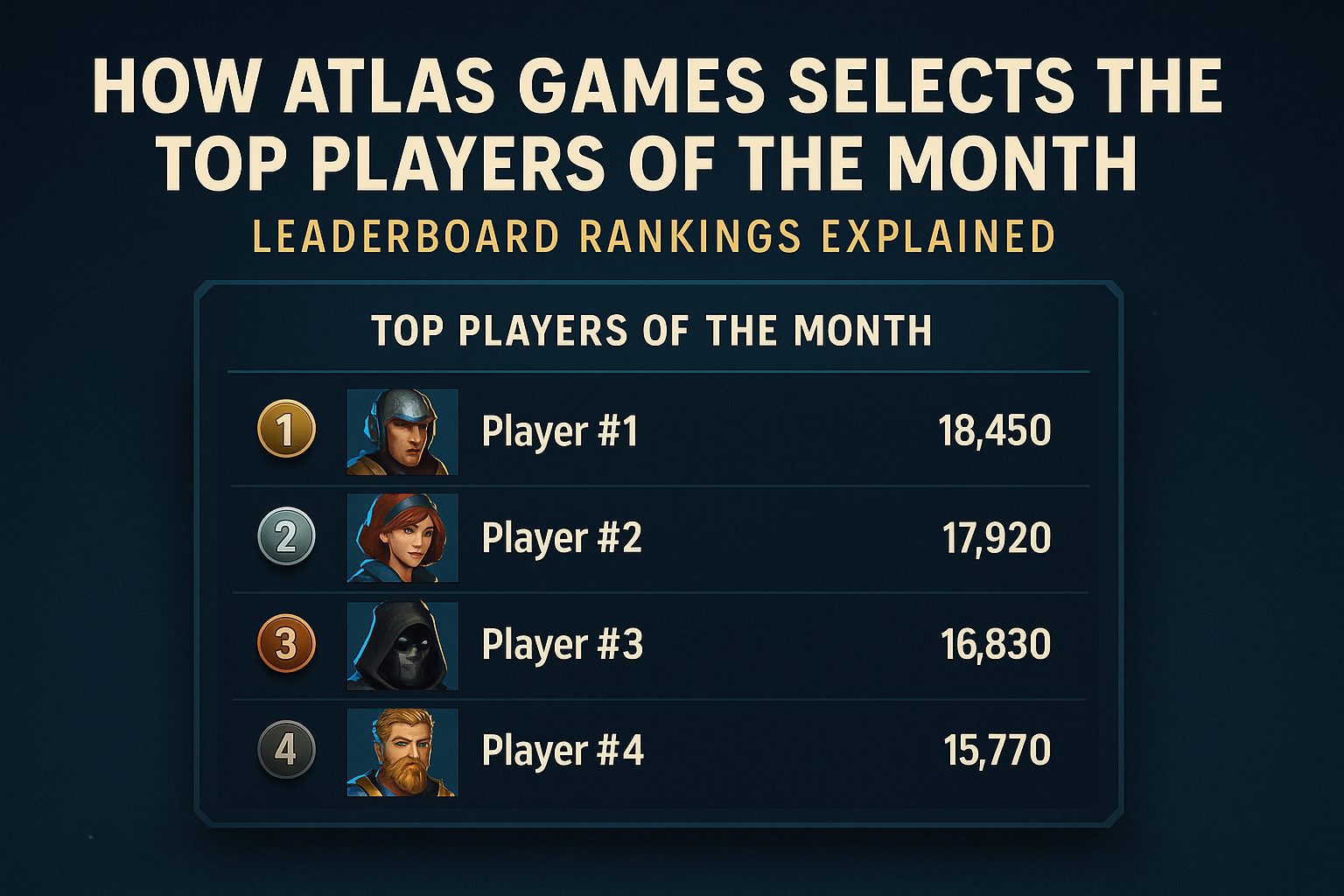
In the competitive world of online gaming, leaderboards aren’t just digital bragging rights—they’re the scoreboard for virtual legends. Atlas Games, one of the fastest-rising names in the multiplayer arena, knows this all too well. With hundreds of thousands of active users and a dynamic player base, the platform has become a battleground where top talent emerges every month. But how do these players earn their spots? What separates a leaderboard contender from the rest? This article dives into the strategies, statistics, and selection processes behind the Top Players of the Month on Atlas Games.
Introduction
Why Leaderboards Matter in Online Gaming
Leaderboards are the pulse of competitive gaming. They show who’s hot, who’s rising, and who’s slipping. For casual gamers, they offer goals. For pros, they’re the ultimate test. These boards bring credibility to effort, converting grind into recognition. In short, if you’re aiming to be seen and respected in the community, that leaderboard rank means everything.
They also drive engagement. Players log in daily, not just for fun—but for the climb. The chance to top a leaderboard creates a buzz that keeps the game alive. It also encourages sportsmanship and performance improvement, making the community more competitive and fun.
The Rise of Atlas Games as a Competitive Platform
Atlas Games didn’t just stumble into the spotlight—it earned its place. Combining immersive gameplay with smart matchmaking and competitive modes, it has created an environment where leaderboards feel meaningful. Its unique reward systems, active community, and regular tournaments make it ideal for both casual and hardcore players.
And each month, it celebrates its best. Not with empty applause, but with real, trackable recognition on its public leaderboard. Knowing how these rankings work is the first step toward claiming your spot.
Understanding Atlas Games
What is Atlas Games?
Atlas Games is a multiplayer gaming platform known for its fast-paced, strategy-based titles. Think a mix of skill-based arenas, tactical missions, and role-playing elements. The platform supports solo, duo, and squad play—making it diverse enough to cater to all types of players.
It’s not just about shooting or surviving. Atlas puts a heavy emphasis on stats, strategy, and smart decision-making. It’s a platform where brains and reflexes matter in equal measure. And that’s what makes the leaderboard system so interesting—it rewards both consistency and creativity.
Game Modes and Competitive Structure
Atlas offers multiple game modes: ranked matches, seasonal tournaments, and time-limited challenges. Ranked modes contribute directly to leaderboard standings. Every kill, assist, objective, and win adds to your score.
The system is structured so that no one can “cheat” the leaderboard by playing easy matches. There’s matchmaking that ensures you’re always facing similarly ranked players. The higher you climb, the tougher your opponents get—which means earning a top spot is a real accomplishment, not just a numbers game.
Leaderboards Explained
What is a Gaming Leaderboard?
At its core, a leaderboard is a ranked list of players based on their performance metrics. In Atlas Games, this includes wins, kill/death ratio, match participation, and XP earned. The goal is to provide a transparent and fair way to celebrate top performers.
Leaderboards are often divided into categories: global, regional, and by game mode. This gives everyone a chance to shine, whether they’re dominating globally or just crushing it in their region.
Monthly vs. Weekly Leaderboards
While weekly leaderboards keep short-term activity high, the monthly leaderboard is the gold standard. It reflects sustained performance, not just one lucky weekend. To get there, you need consistent results, steady logins, and ongoing teamwork.
The monthly format also allows Atlas Games to properly vet performances, ensuring no cheating or stat-padding occurs. That makes each monthly leaderboard announcement feel like a real event—players wait for it, hope for it, and if they’re lucky, celebrate it.
Metrics Used to Rank Players
Win Rate and Kill/Death Ratio
These are the bread and butter of leaderboard stats. Win rate shows how often you help your team secure victory. The higher the percentage, the better. Kill/death ratio (K/D) shows your efficiency in combat. A high K/D means you’re not just surviving, you’re dominating.
But Atlas Games doesn’t just take raw numbers. It analyzes performance relative to opponent skill, map type, and more. That means you can’t just farm easy wins—you need to excel against strong competition.
XP Points, Rank Tiers, and Matchmaking Ratings
Beyond K/D and wins, Atlas uses XP points earned in matches as a critical ranking factor. These points are influenced by your role performance, objective completions, and even assist count.
Rank tiers also play a big part. Are you in Bronze? Silver? Platinum? The higher your tier, the more your performance weighs in leaderboard placement. Matchmaking Rating (MMR) ensures you’re being fairly ranked based on both skill and experience.
How to Qualify for the Monthly Leaderboard
Activity Thresholds and Participation Requirements
You can’t expect to hit the top of the leaderboard with just one or two solid matches. Atlas Games requires consistent participation to qualify for leaderboard consideration. That means playing a set number of ranked matches each week or maintaining a minimum level of engagement over the month.
The system filters out inactive or “one-hit wonder” players. This ensures that only the truly active and competitive players get the spotlight. Whether you’re playing solo or as part of a squad, sustained involvement is key.
On top of that, AFK behavior, early match quits, and reported toxicity can disqualify a player—even if their stats are high. Atlas wants its leaderboard to be a symbol of excellence, not just good aim or lucky runs.
Consistency Over One-Time Wins
The leaderboard doesn’t reward flukes—it rewards grind and growth. Players who steadily rack up wins, contribute to their team, and avoid losing streaks are more likely to rank. That means it’s better to win 8 out of 10 matches steadily than win 20 in a row and then vanish for two weeks.
Consistency shows mastery. It means you’re not just having good days—you’re becoming a force to reckon with. That’s the mindset required to make it onto the monthly leaderboard.
Spotlight on Top Performers
Who Made the Cut This Month?
Each month, the leaderboard highlights the top 100 players globally and regionally. These names aren’t just listed—they’re celebrated. Atlas showcases them on their homepage, shares social media shoutouts, and sometimes even features exclusive interviews or highlight reels.
These players are often trendsetters. The meta? They’re shaping it. Their strategies? Being studied. And their usernames? Recognized across the community. Making it onto the leaderboard doesn’t just mean bragging rights—it means influence.
Player Profiles and Their Strategies
Top players tend to share common traits: strong map knowledge, excellent reflexes, and deep understanding of game mechanics. But each one also brings something unique. Some specialize in support roles, others dominate as assassins or objective-rushers.
Atlas occasionally dives deeper into these profiles, offering community breakdowns of how leaderboard players build their loadouts, how they approach matches, and what sets them apart. These insights are pure gold for anyone trying to improve.
Want to be on this list? Start analyzing how the best play. Study their decision-making. Emulate their discipline. Then make your own mark.
Tools Atlas Uses to Track Performance
AI and Statistical Tracking
Atlas Games uses a smart backend powered by AI to analyze every move you make in-game. Every kill, assist, miss, objective interaction, and even team communication is tracked. This ensures rankings aren’t just about who shoots the most—but who plays the smartest.
The AI evaluates patterns over time. Are you improving? Are you carrying your team or just tagging along? It scores everything to make sure leaderboard standings reflect real skill and not short-term luck or spammy tactics.
This system also helps flag anomalies—like sudden surges in performance that might indicate account sharing or third-party tool usage.
Anti-Cheat and Fair Play Enforcement
Nothing kills a competitive scene faster than cheaters—and Atlas Games is on top of that. Their anti-cheat system runs in real-time, constantly scanning for behavior that breaks the rules.
Leaderboards are scanned before publication. If a player is caught using exploits, farming bots, or displaying suspicious activity, their stats are immediately invalidated and removed from contention. Repeat offenders face bans and are blacklisted from ranked play.
This commitment to fairness builds trust in the leaderboard system. When you see someone at the top, you know they earned it.
The Impact of Leaderboards on Player Behavior
Motivation and Drive
Leaderboards are powerful motivators. They push players to get better, communicate more effectively, and understand the game at a deeper level. For some, climbing the leaderboard is more exciting than unlocking new gear or winning matches.
It’s not just about ego. It’s about proving to yourself that you can hang with the best. That daily climb to a higher rank becomes a part of your routine—a mission, a ritual.
For content creators, high rankings also mean more visibility. Streams, highlight videos, and sponsorships often start with a spot on the leaderboard.
Potential for Toxicity and Burnout
Of course, there’s a downside. The pressure to maintain a high rank can lead to toxic behavior—blaming teammates, raging in chat, or quitting matches early. Atlas has implemented systems to monitor and penalize such conduct, but it’s a challenge that exists in any competitive game.
There’s also the risk of burnout. Grinding every day for rank can sap the fun out of the game. Atlas encourages healthy play by including optional rest days in seasonal events and promoting community modes that are leaderboard-free.
The key is balance. Play to win, but don’t lose your sanity over it.
Community Reactions and Discussions
Player Feedback on Rankings
Every leaderboard update sparks conversation. Some cheer, some complain, and some offer suggestions for improving the system. Atlas Games listens. They host feedback sessions, Reddit AMAs, and run regular surveys to gauge how players feel about the fairness and accuracy of rankings.
Sometimes, changes are made based on that feedback—like adjusting the weight of support roles or expanding the leaderboard beyond the top 100 to top 500.
The community feels like they have a voice in shaping the system, which increases engagement and trust.
Forum Debates and Suggestion Threads
The forums and Discord channels light up with theories and strategy debates after each update. “How did Player_X climb so fast?” “What role is OP this season?” “Should the leaderboard account for assists more?”
These discussions help players learn and improve. They also foster a competitive but collaborative spirit. After all, everyone’s trying to get better—and iron sharpens iron.
Tips for Climbing the Leaderboard
Focus on Team Play and Coordination
One of the most common mistakes competitive players make is assuming that individual skill alone will carry them to the top. In Atlas Games, that couldn’t be further from the truth. While personal performance matters, team synergy is often the deciding factor.
Focus on playing roles that your team needs. Communicate clearly. Stick to the objectives. Learn the strengths and weaknesses of your teammates and help fill in the gaps. Whether you’re leading an assault or holding down the backline, your contributions matter.
Remember, Atlas tracks team-based stats. So, assists, revives, pings, and strategic plays are all part of your ranking potential.
Analyze Replays and Improve Weak Points
If you’re serious about climbing, you’ve got to review your matches. Atlas lets you watch past games, and this is an untapped goldmine for improvement.
Watch your positioning, timing, and decision-making. Were you too aggressive? Did you fail to rotate when you should’ve? Break it down like a coach reviewing a game film. Identifying one bad habit and fixing it could be what bumps you up ten spots.
You can also watch high-ranking players’ replays to compare styles and see what they do differently. Absorb the best, adapt it to your game, and level up.
Rewards for Top Players
In-Game Skins, Titles, and Currency
Atlas Games knows how to treat its elite. Players who reach the monthly leaderboard receive exclusive cosmetic rewards—special skins, profile borders, emotes, and animated avatars that aren’t available anywhere else.
These cosmetics are status symbols. When other players see you wearing them, they know you’ve earned your place. It’s like wearing a championship ring in a virtual world.
On top of that, leaderboard players earn in-game currency, which can be used to unlock premium content without spending real money. It’s a system that respects your grind and makes your time feel valuable.
Social Recognition and Real-World Perks
Leaderboard players aren’t just recognized in-game—they’re often featured on Atlas Games’ social media pages, live streams, and community spotlights. Some are even invited to private beta tests for upcoming features or get early access to new content.
In rare cases, top-tier players are offered partnerships, sponsorships, or invites to tournaments with real-world cash prizes. So if you’re aiming to build a personal brand or gaming career, climbing that leaderboard is a solid start.
How to Nominate Players
Community Voting and Moderator Selections
Atlas Games also offers a nomination system to highlight players who may not be in the top 100 by stats but are MVPs in spirit. Maybe they’re known for exceptional teamwork, leadership, or being a positive force in the community.
Every month, players can submit nominations through the Atlas website. A panel of community moderators and staff review the submissions and select a few honorable mentions who are then featured in the “Community Champion” section.
Fairness and Transparency in Nominations
The nomination process is transparent. Voters need to submit match evidence, screenshots, or clips to support their nomination. This ensures the system isn’t abused and that every nomination is well-deserved.
This additional layer of recognition encourages more positive behavior, reinforces a healthy gaming culture, and gives everyone—regardless of raw stats—a chance to shine.
Developer Insights
How Atlas Devs Manage Leaderboards
Managing a competitive leaderboard for thousands of active users is no small task. The Atlas Games dev team uses a combination of automated systems and manual reviews to ensure accuracy and fairness.
They also collaborate with data analysts, esports advisors, and community managers to refine the scoring formulas. Their goal? To create a system that’s challenging but achievable, rewarding but not punishing.
Transparency is key. The devs regularly publish blog posts detailing how changes to the game impact the leaderboard and what tweaks have been made to the ranking algorithms.
Future Features Planned
Looking ahead, Atlas Games is planning to roll out:
- Leaderboard Seasons with exclusive long-term rewards
- Regional Championships based on leaderboard standings
- Player Stats Dashboards so users can monitor their progression in real time
- Mobile Notifications to track your rank even when you’re offline
These enhancements are designed to keep the leaderboard dynamic, competitive, and more accessible than ever before.
Comparison with Other Gaming Platforms
How Atlas Stands Out
What makes Atlas Games unique is its focus on integrity and community. While other platforms may prioritize flashy visuals or aggressive monetization, Atlas doubles down on fair gameplay and competitive recognition.
Its blend of ranked progression, reward systems, and player support makes it ideal for both casual gamers and serious contenders. The platform respects your time and rewards dedication in ways that many other games overlook.
What Others Can Learn from It
Atlas shows that a great leaderboard isn’t just about stats—it’s about community, transparency, and consistent improvement. Other games could benefit from adopting similar policies: fair matchmaking, regular feedback loops, and rewarding not just performance, but positive contributions.
Conclusion
Final Thoughts on Competing and Ranking in Atlas Games
Leaderboards are more than just numbers—they’re the heartbeat of competition in Atlas Games. They drive players to be better, encourage teamwork, and create legends out of everyday gamers.
Whether you’re a veteran looking to climb or a newbie dreaming of glory, understanding how the system works is your first step. Play smart, stay consistent, and don’t just chase numbers—chase improvement.
The Atlas Games leaderboard isn’t just for the best. It’s for the best who earned it. So if you’re ready to rise, the spotlight is waiting.
FAQs
How often are leaderboards updated on Atlas?
Leaderboards are refreshed in real-time but finalized and published monthly. Weekly snapshots are available for tracking your progress.
Can a new player make it to the top?
Absolutely. If you play consistently, focus on learning, and perform well in ranked matches, you can rise through the ranks—even as a newcomer.
Are the rankings region-specific?
Yes. Atlas maintains both global and regional leaderboards, giving players from every part of the world a fair shot at recognition.
Is there a penalty for inactivity?
Yes. Inactivity for more than seven days during the competition period will disqualify you from that month’s leaderboard.
How can I check my rank in real-time?
Log in to your Atlas Games account and go to the Leaderboard section. There, you’ll find your global, regional, and mode-specific rankings.